
The secrets of the truffle hunter according to Savini: tradition and passion
In the silent woods, beneath the foliage, the truffle hunter moves with careful steps, intuition, and deep respect for nature. For the Savini Tartufi family, the truffle hunter embodies tradition, experience, and love for the land. In this article, we enter the world of the truffle hunter, exploring their secrets, the hands that work the soil, and the values that transform the hypogean fungus into gastronomic excellence.
The tradition of the truffle hunter: experience, nature, and product care
The passion of the truffle hunter often comes from generations living close to the woods, learning to recognize the right trees, the ideal soil, and the signs of nature. Savini Tartufi explains that each season has its own truffle, and that the art of the truffle hunter lies in knowing how to wait, perceive, and respect the rhythms of nature.
The truffle hunter’s skill does not come only from the act of harvesting, but from years of experience that teach the value of the environment, mycorrhiza, and sustainable foraging.
The truffle hunter knows the woods well: trees such as oaks, hornbeams, and hazelnuts indicate the right terrain. The secrets of the truffle hunter include observation, silence, intuition — often aided by a trained dog. But there is also a more subtle knowledge: understanding when to let the truffle mature and when to respond to the call of the woods. In Tuscany, the Savini Tartufi family has worked for generations, and they emphasize that their success was born from this balance between humans and nature.
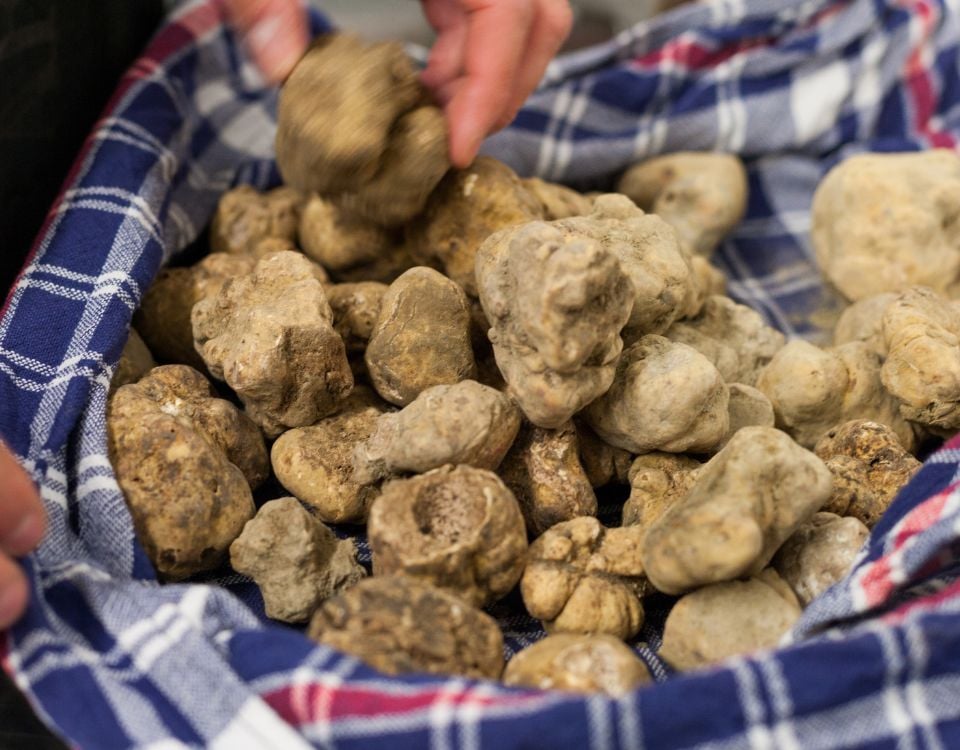
When the truffle is harvested, another part of the truffle hunter’s craft comes into play: preservation and enhancement. Savini Tartufi speaks of its “truffle all year round,” a sign that the truffle hunter’s work does not end with harvesting—selection, storage, and processing follow strict criteria. The secrets of the truffle hunter therefore also include caring for the product from the forest to the table, because a poorly preserved truffle loses aroma and value.
Respect for nature: sustainability and the truffle hunter’s culture
Another fundamental aspect is respect. A true truffle hunter does not exploit the woods but works in harmony with them. Savini Tartufi highlights that the family has maintained a vision that prioritizes the land and quality over quantity. Sustainability becomes an integral part of the truffle hunter’s craft: choosing the right trees, not damaging the mycorrhiza, leaving only light traces in the woods.
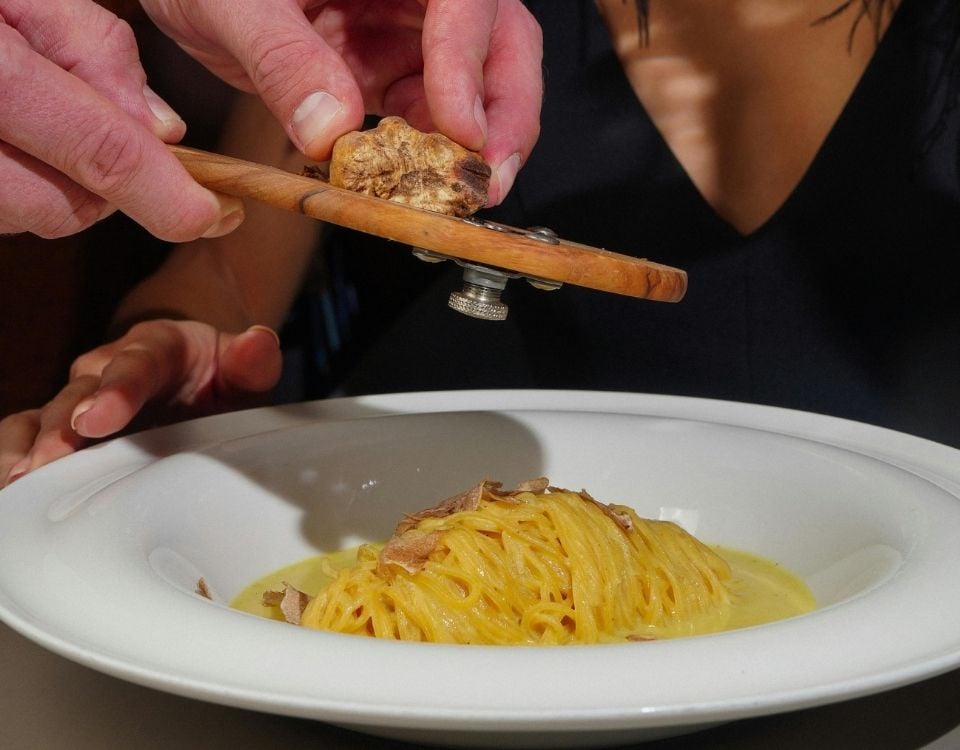
The truffle hunter’s experience teaches that every harvest is unique: climate, rain, and temperature change the conditions. The secrets of the truffle hunter therefore lie also in the ability to adapt and observe. Savini Tartufi explains that the aroma of truffle expresses itself best when enhanced in the dish, sliced at the right moment, and enjoyed with respect.
This link between harvesting and consumption reflects the idea that the truffle hunter is not just a forager but a guardian of a gastronomic heritage. The final customer benefits from this culture: tasting a truffle that has been carefully selected, sliced, and preserved is a privilege made possible by the truffle hunter’s work.
In conclusion, understanding the secrets of the truffle hunter means appreciating truffles not only as an ingredient but as the result of a craft requiring time, sensitivity, and dedication. The Savini Tartufi family has passed down these values for four generations, and every time a truffle arrives at the table, it tells a story. Those who love truffles understand that behind their aroma are the woods, the person, the dog, the tree, the waiting.
For those who wish to enhance this unique ingredient, it is worth reflecting on what the truffle hunter brings to the plate: a living tradition, an ancient gesture, a passion that renews itself. When we speak of the truffle hunter, we do not speak only of harvesting: we speak of a deep relationship with nature and with taste.